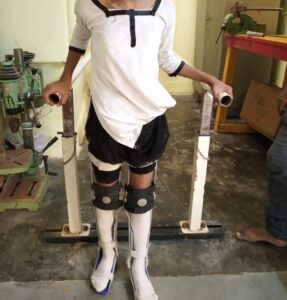
- LOWER EXTERMITY ORTHOSIS
Rising steps giving and best solutions of any kind of lower extremity. We are doing proper assessment, check diagnosis according to that we are designing orthosis.
- INSOLE
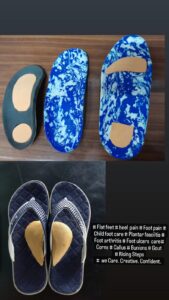
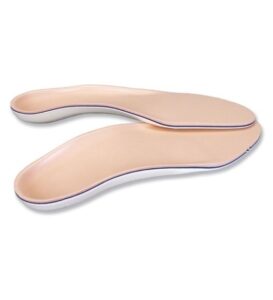
- A custom orthotic is a device designed to align the foot and ankle into the most anatomically efficient position insole is a biomechanical medical appliance that are custom made to correct your specific foot imbalance. It helps to reduce stress and strain on your body by bringing your feet back into proper alignment.
- The plastic body of the custom orthotic helps to re-align the foot by redirecting and reducing certain motion that takes place during the gait cycle. Custom orthotics fit into your shoes as comfortably as an insole – and they have the advantage of having been made from precise imprints of your feet.
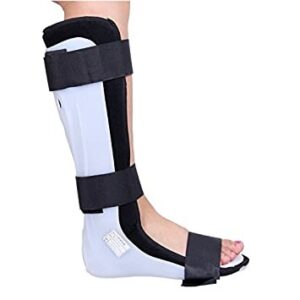
- Ankle Foot Orthosis
- Ankle foot orthosis (AFO) is used to improve walking patterns by reducing, preventing or limiting movement of the lower leg and foot and by supporting weak muscles.
- They are also used to maintain joint alignment, accommodate deformity and to help reduce spasticity. AFOs encompass the leg and foot and are worn with shoes and socks.
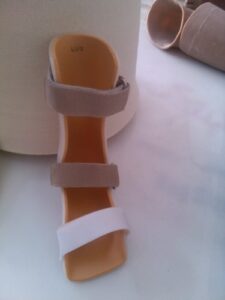
- Knee Ankle Foot Orthosis
- A Knee Ankle Foot Orthosis or KAFO is a that is used to control instabilities in the knee and lower limb by maintaining proper alignment and controlling motion.Instabilities can be caused by broken bones, arthritic joints, hyperextension of the knee, muscle weakness and/or paralysis.
- As there are many different reasons that a person may need to utilize a KAFO, there are many different designs for a KAFO based on necessity.
- Hip Knee Ankle Foot Orthosis
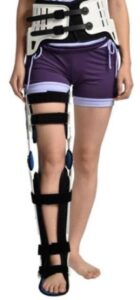
- The term HKAFO is an acronym that stands for hip-knee-ankle-foot-orthosis and describes the part of the body that this device encompasses. This device is basically a KAFO with the addition of a hip joint and pelvic section.
- The addition of the hip joint and pelvic section provides control to selected hip motions. These selected motions about the hip are front to back, side to side, and rotation. One reason the hip section is added to a KAFO is to reduce or minimize the risk of the hip moving out of proper position or dislocating.
- Another common reason is to stabilize the hip and lower spine in cases where the patient is weak or paralyzed. One common application of HKAFO is RGO, or, reciprocal gait orthosis, which helps move one hip upon moving the other hip and encouraging a normal gait.